Why this ridge
This was the very first hike I recorded, in March 2024. I picked it for two reasons. It is easy to reach from Tokyo, and I wanted to find out how much stamina I actually had. If I ran out of energy, there were plenty of places along the ridge where I could drop down to a road and go home, and I knew there would be lots of other people around.
I went up the Inariyama trail that day. For the first thirty minutes of steps I honestly thought, there is no way I can do this. Then my body got used to it, and I ended up enjoying the whole day. Only the start was hard.
I have now walked the full ridge five times, and parts of it many more. The trip below is from 29 March 2026.
Mt. Takao is busy. The ridge beyond it is not.
Mt. Takao is a hugely popular day trip from central Tokyo, and you will see all kinds of people on it: tourists in ordinary clothes, sometimes people in suits or in shoes that aren’t made for walking. Trail 1, the main route, is mostly paved, and plenty of people walk it in sneakers. For the ridge beyond, wear proper hiking or trekking shoes; that’s also what the Takao Visitor Center recommends.
Keep going past the summit to Shiroyama, Kagenobu and Mt. Jinba, and two things change. Most of the people you meet are properly equipped hikers, and there are far fewer of them. It feels like about a tenth of the crowd on Mt. Takao. No more queues on the trail; you can walk at your own pace and enjoy the mountains.
Trail 6 to the top of Mt. Takao
I started from Kiyotaki Station, the bottom station of the cable car, a little before 8:30, and took Trail 6.
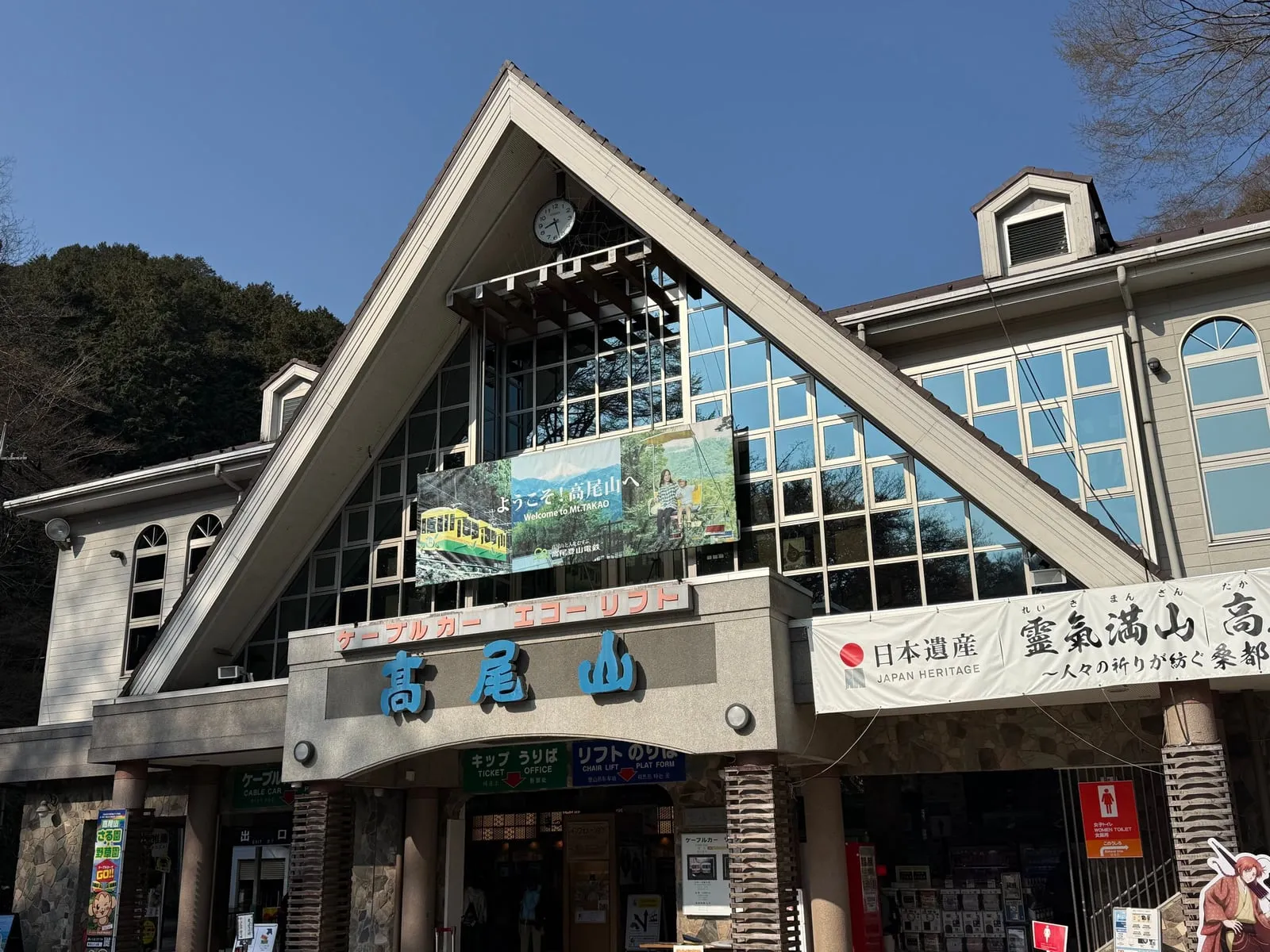
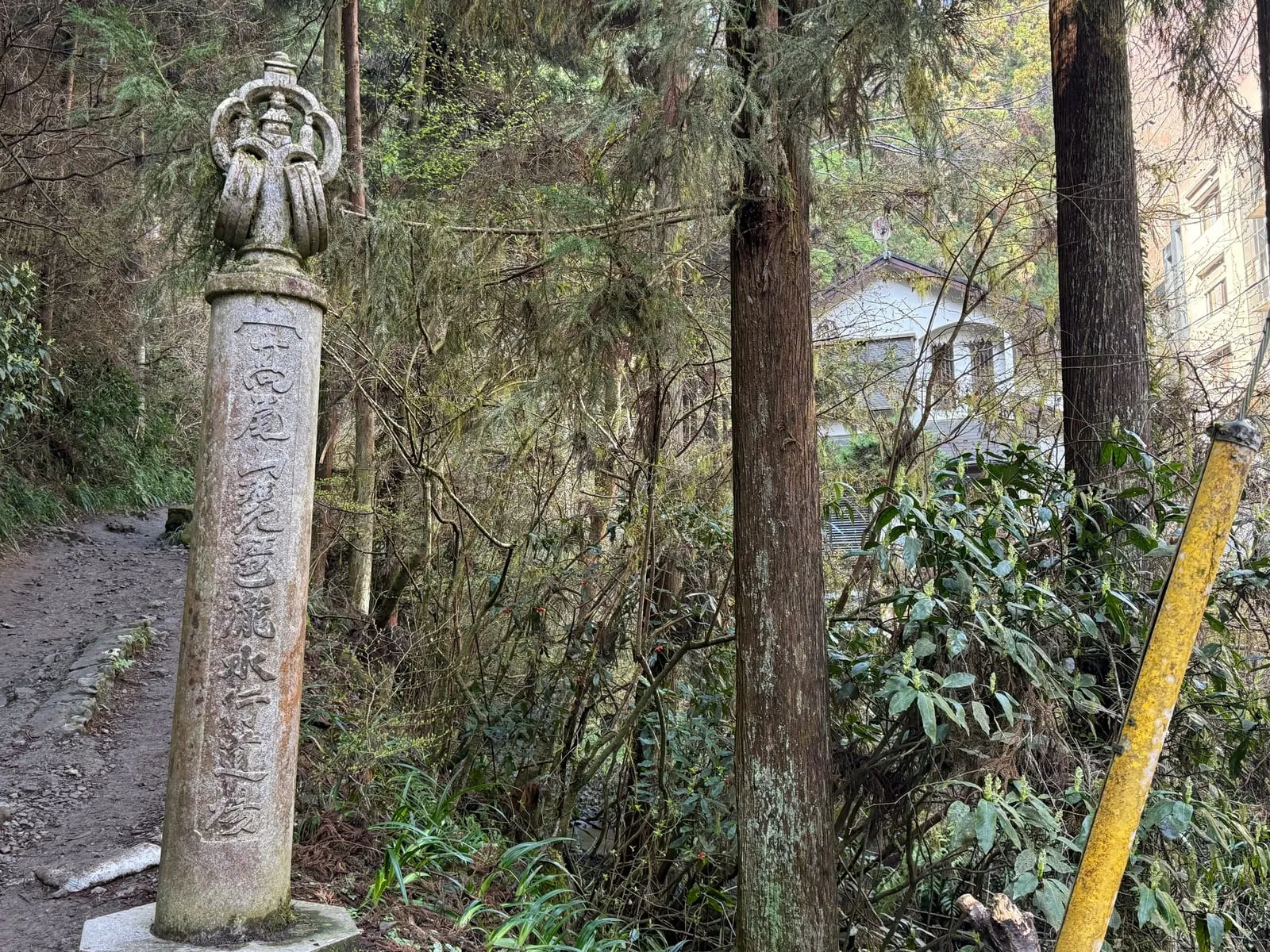
Trail 6 or Inariyama? Both start near the cable car station.
- Trail 6 is busier than Inariyama, so it’s easy to follow. It follows a stream, and parts of the path are wet, so it’s best in waterproof hiking shoes. It is also the more interesting walk; the scenery keeps changing.
- Inariyama is quieter, and it’s a forest trail all the way, so you don’t have to worry about wet feet.
One warning: in busy seasons, trails here can become one-way. From 31 October to 6 December 2026, Trail 6 is uphill only, all day, between Biwa Falls and the junction with Trail 5. Check before you go so you don’t plan to come down a trail that’s closed in your direction.
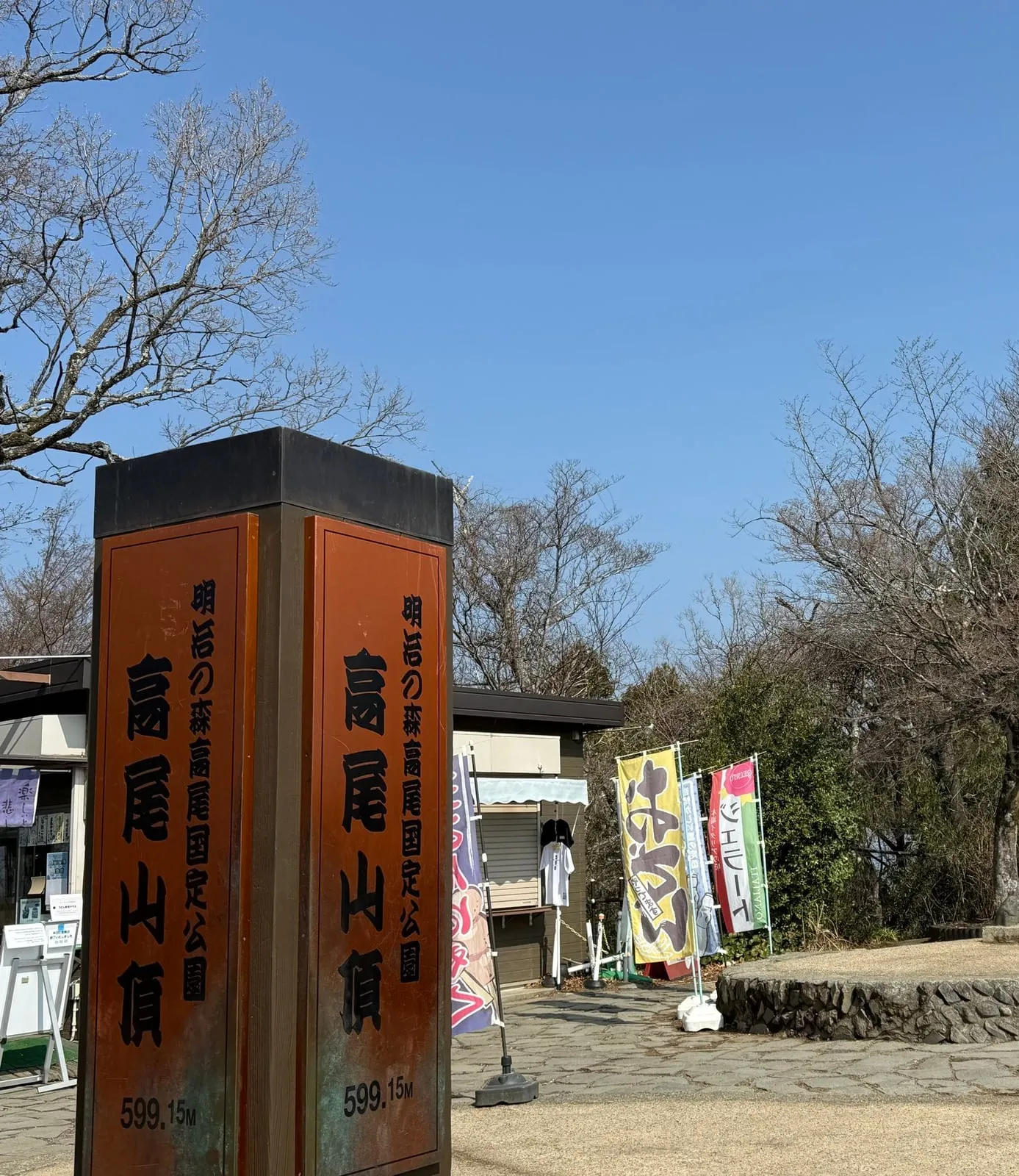
I was on the summit at about 9:20. It was hazy, but I could just make out the Tanzawa mountains.
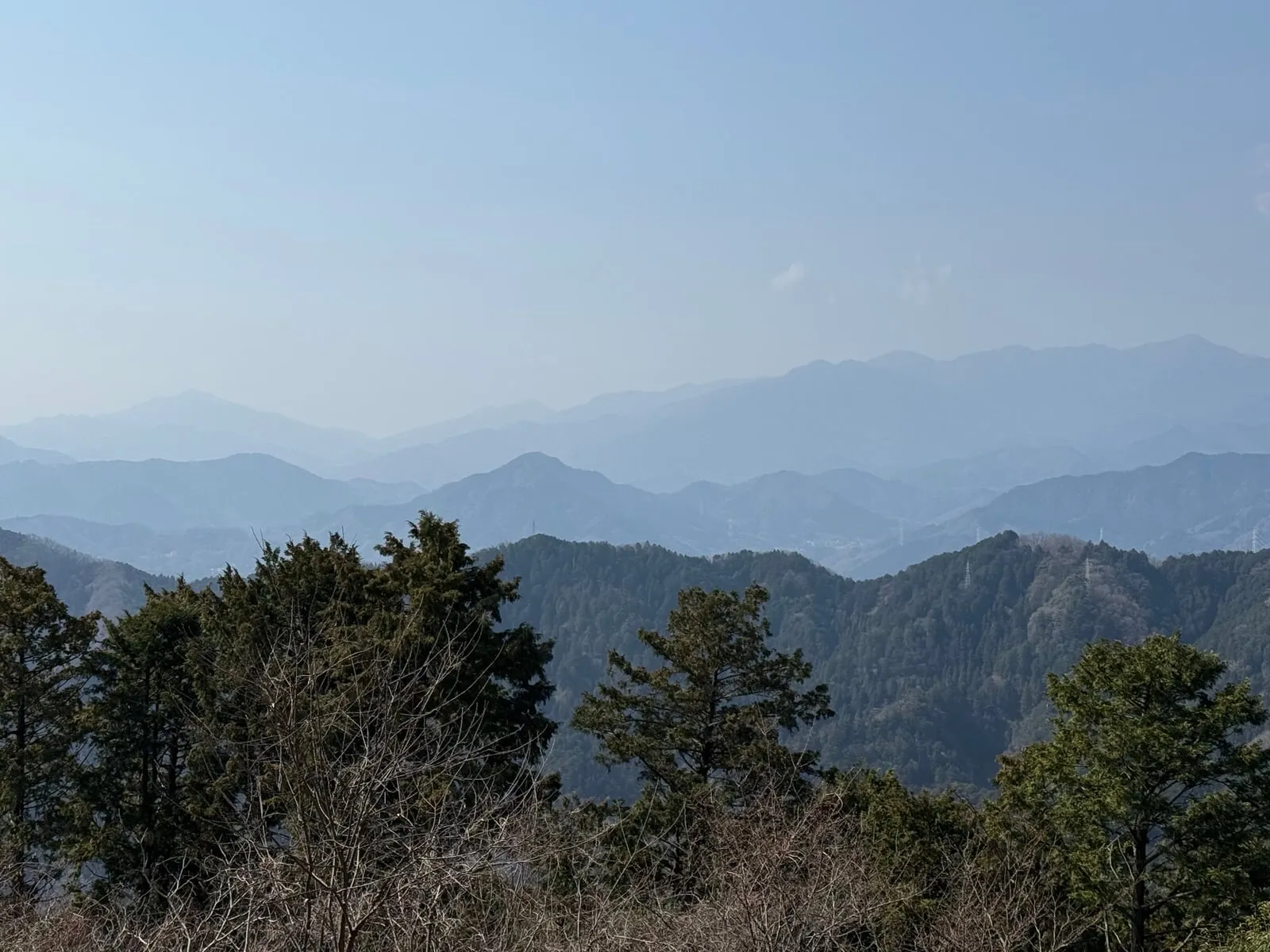
Shiroyama and Kagenobu
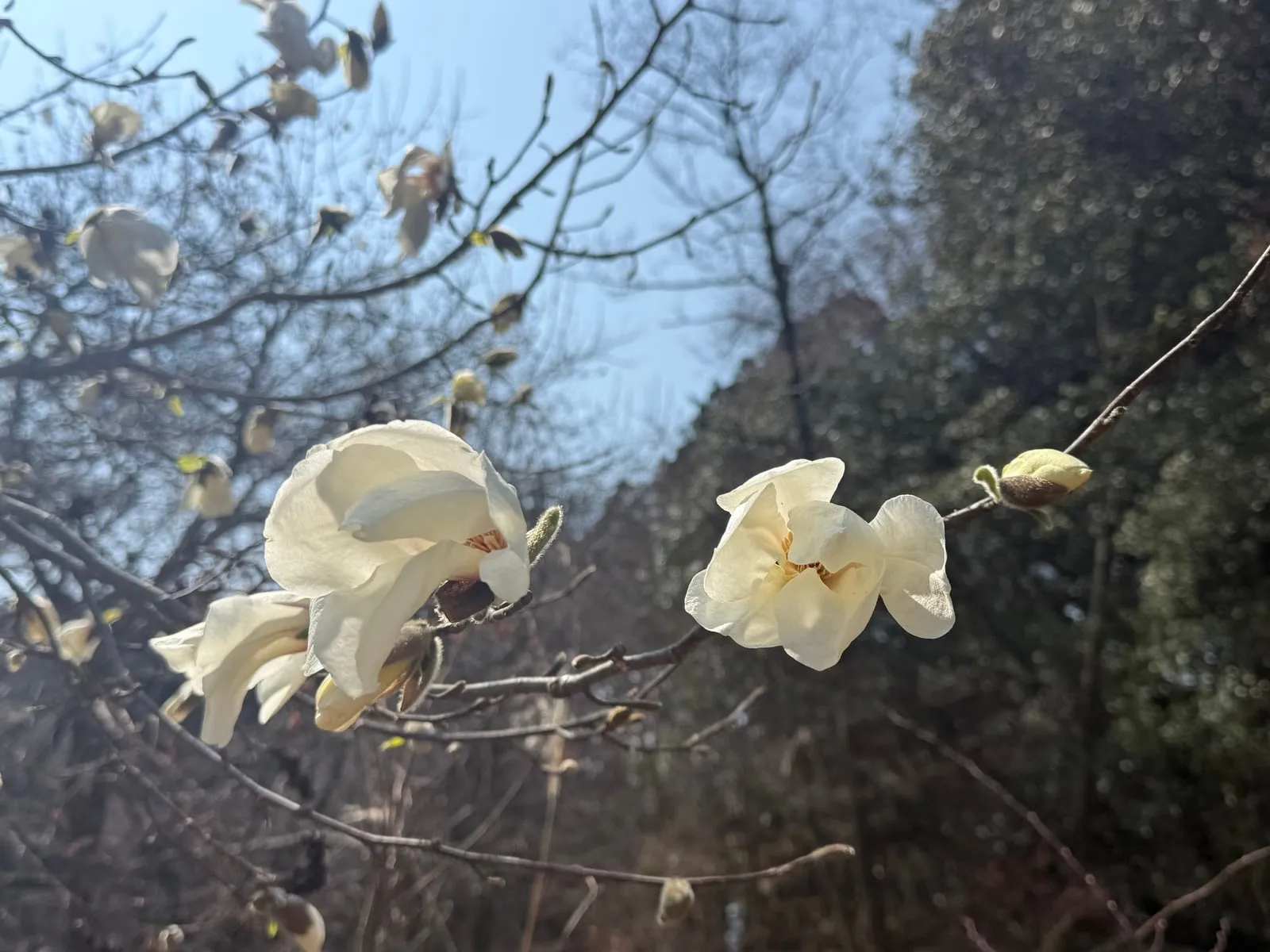
From the summit the trail heads west along the ridge. In late March the white kobushi magnolias were out.
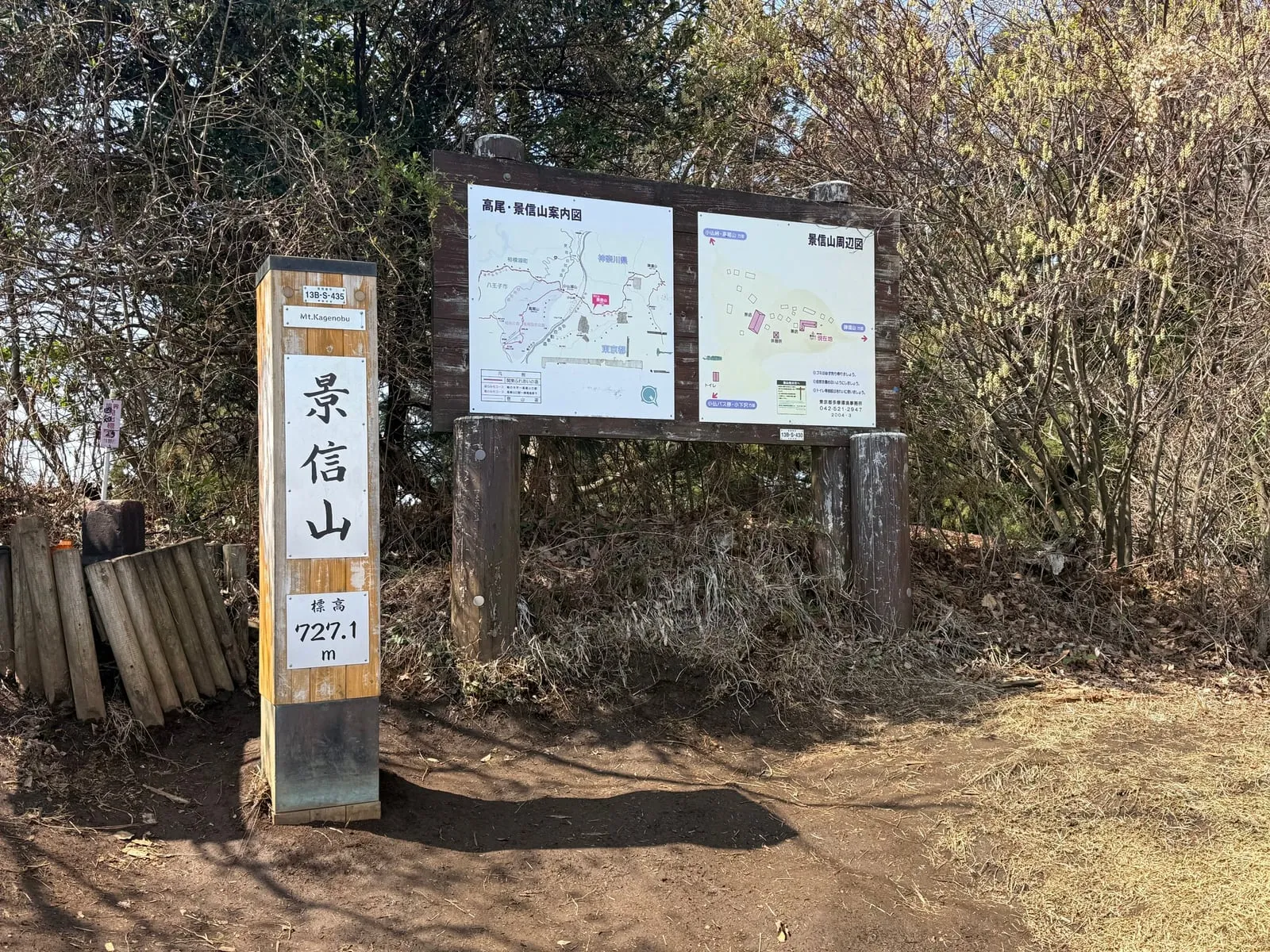
Shiroyama (670 m) has a big teahouse, and Kagenobu (727 m) is the next summit along. The stretch between them, around Kobotoke Pass, has the steepest ups and downs of the whole route.
Kagenobu to Mt. Jinba: the long part
For me, this is the hardest section. The individual climbs aren’t the problem; it’s just a really long way between Kagenobu and Jinba. I’ve never actually wanted to give up, but this is where you’ll feel it.
Mt. Jinba
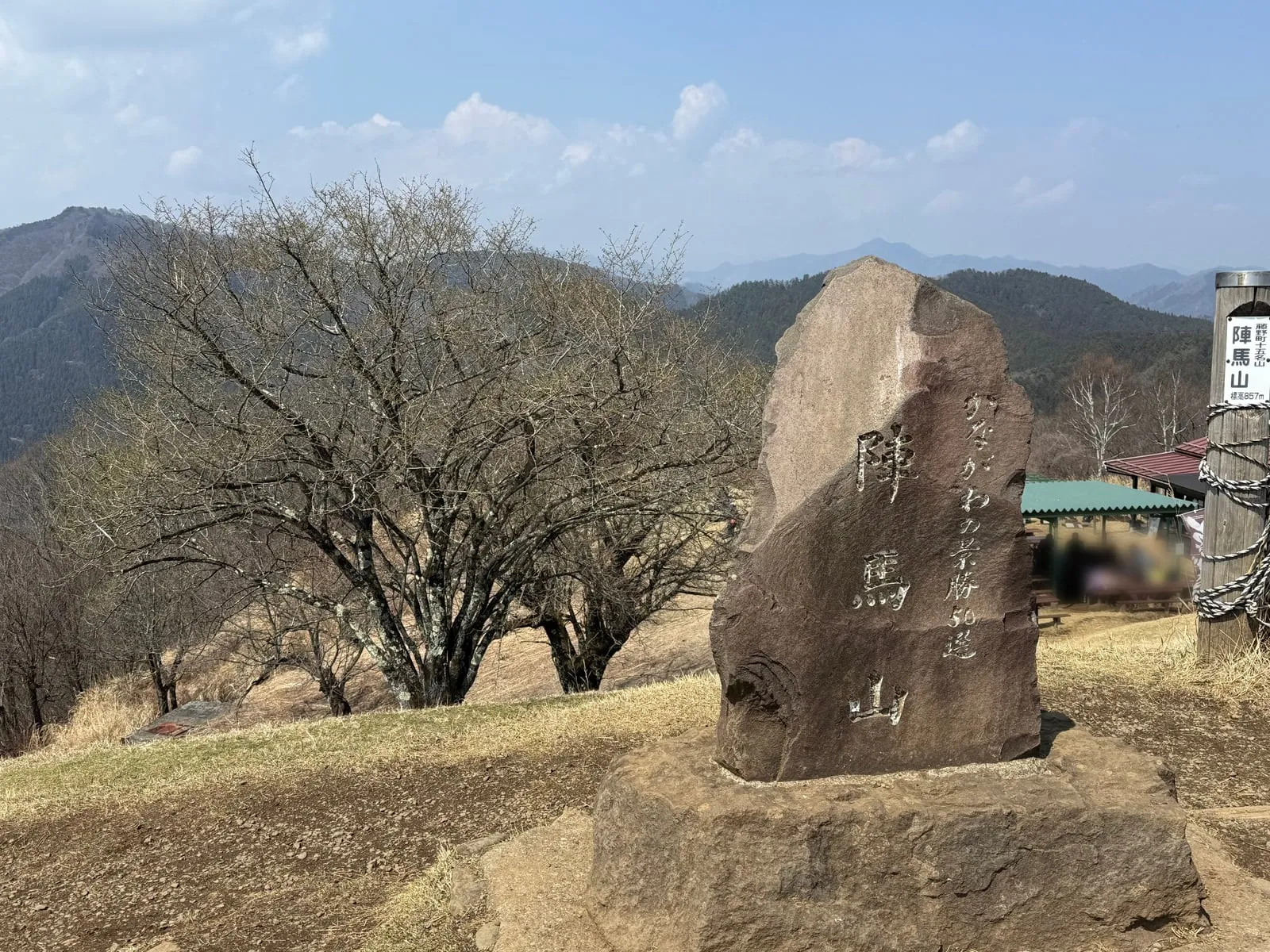
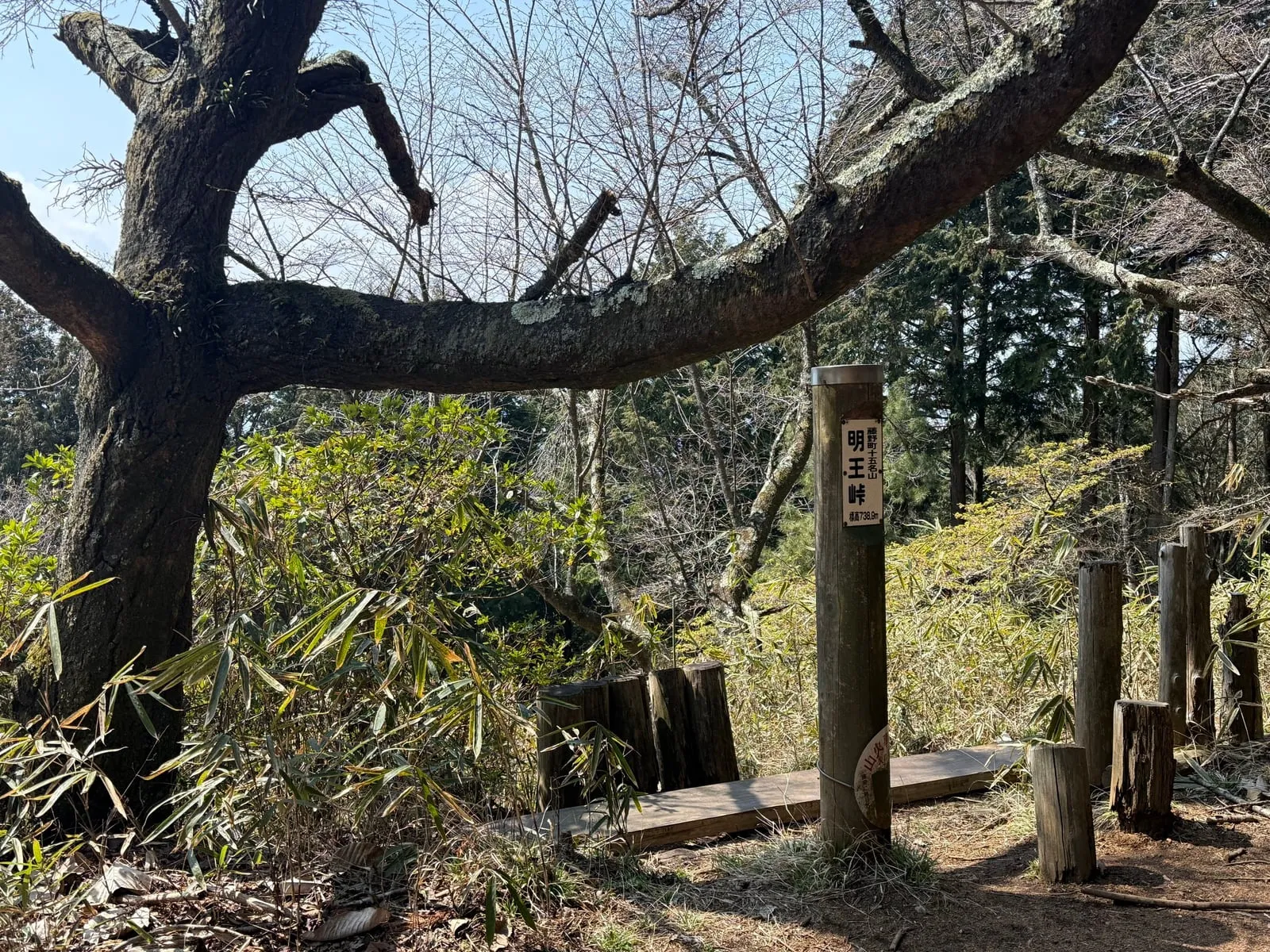
I reached Mt. Jinba a little after noon. The summit is a wide, open meadow with teahouses and a white horse statue. The signs on top give its height as 857 m.
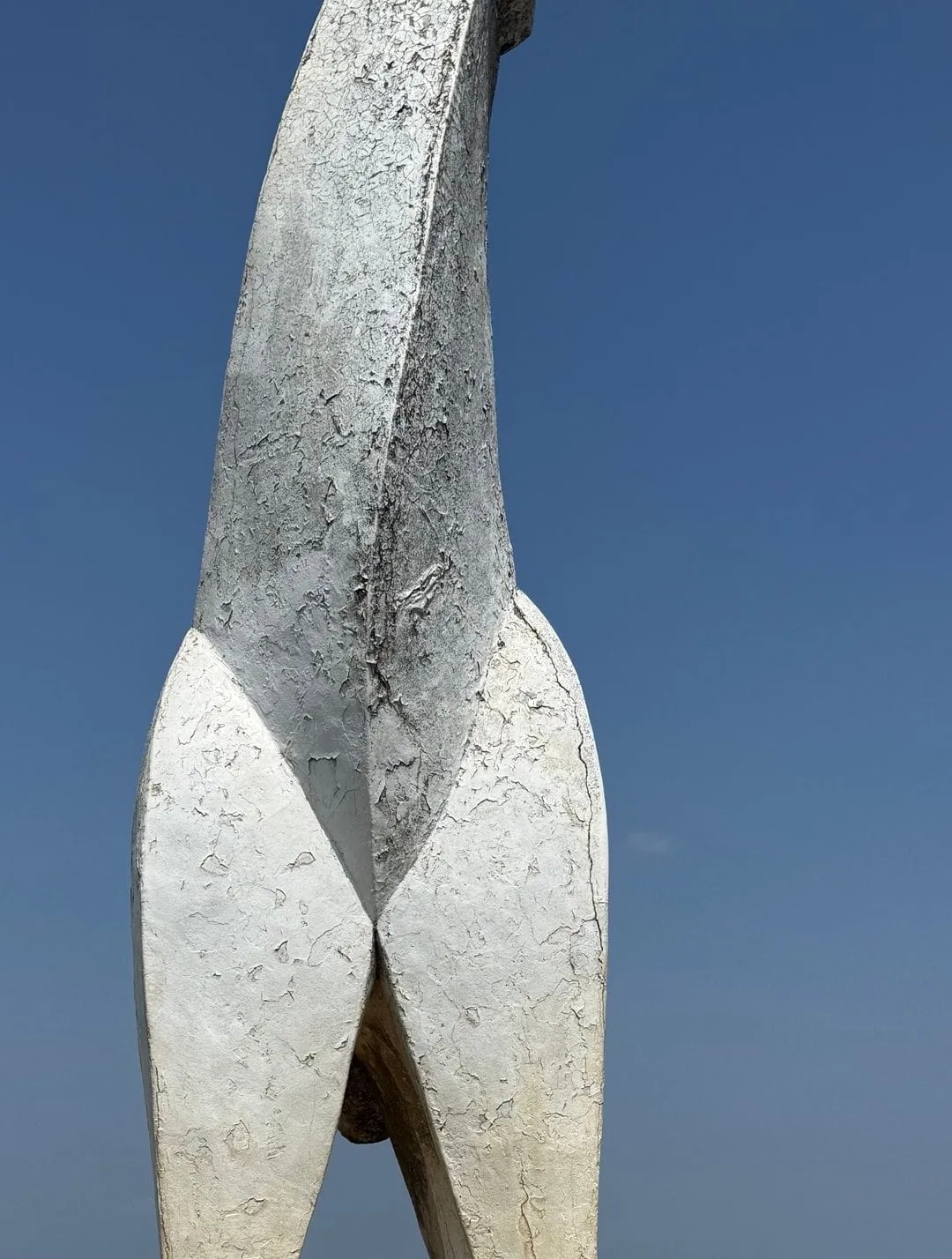
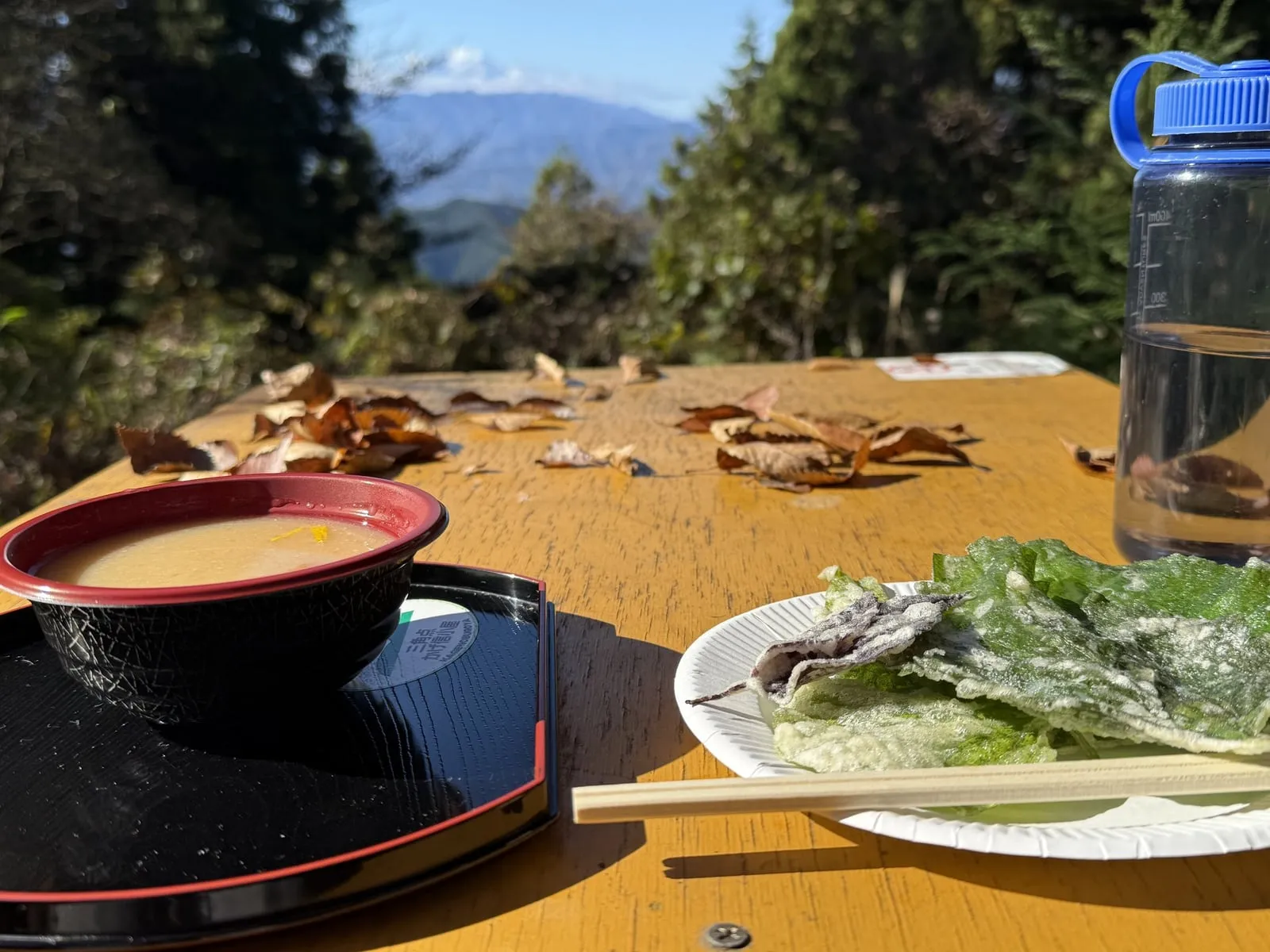
Lunch was kenchin-jiru, a hearty vegetable soup, from one of the summit teahouses.
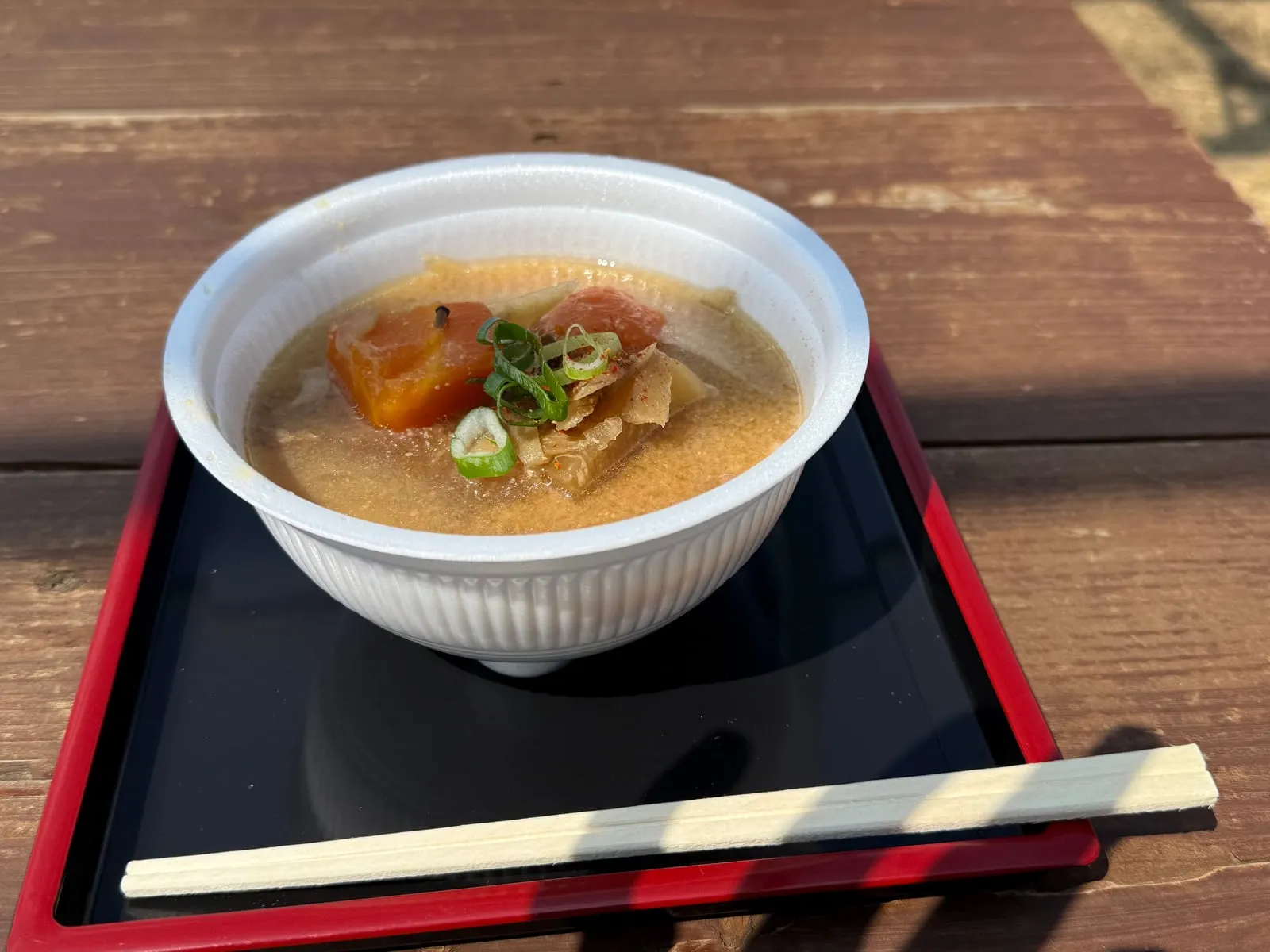
Look at the notices at the summit teahouses before you head down. In June 2026 that’s how I found out the Wada bus had stopped running on weekends. The teahouse also had the Jinba-kōgen-shita timetable posted, so I worked out how long I needed to get down and made the bus home with no trouble.
Down to Wada (March 2026; not the usual way back now)
In March 2026 I went down the Wada side, and was at the trailhead by about 1:15 pm. The Wada bus was still running on weekends then, just barely, and I took it to Fujino Station. Today I’d go down to Jinba-kōgen-shita instead (see Getting home below).
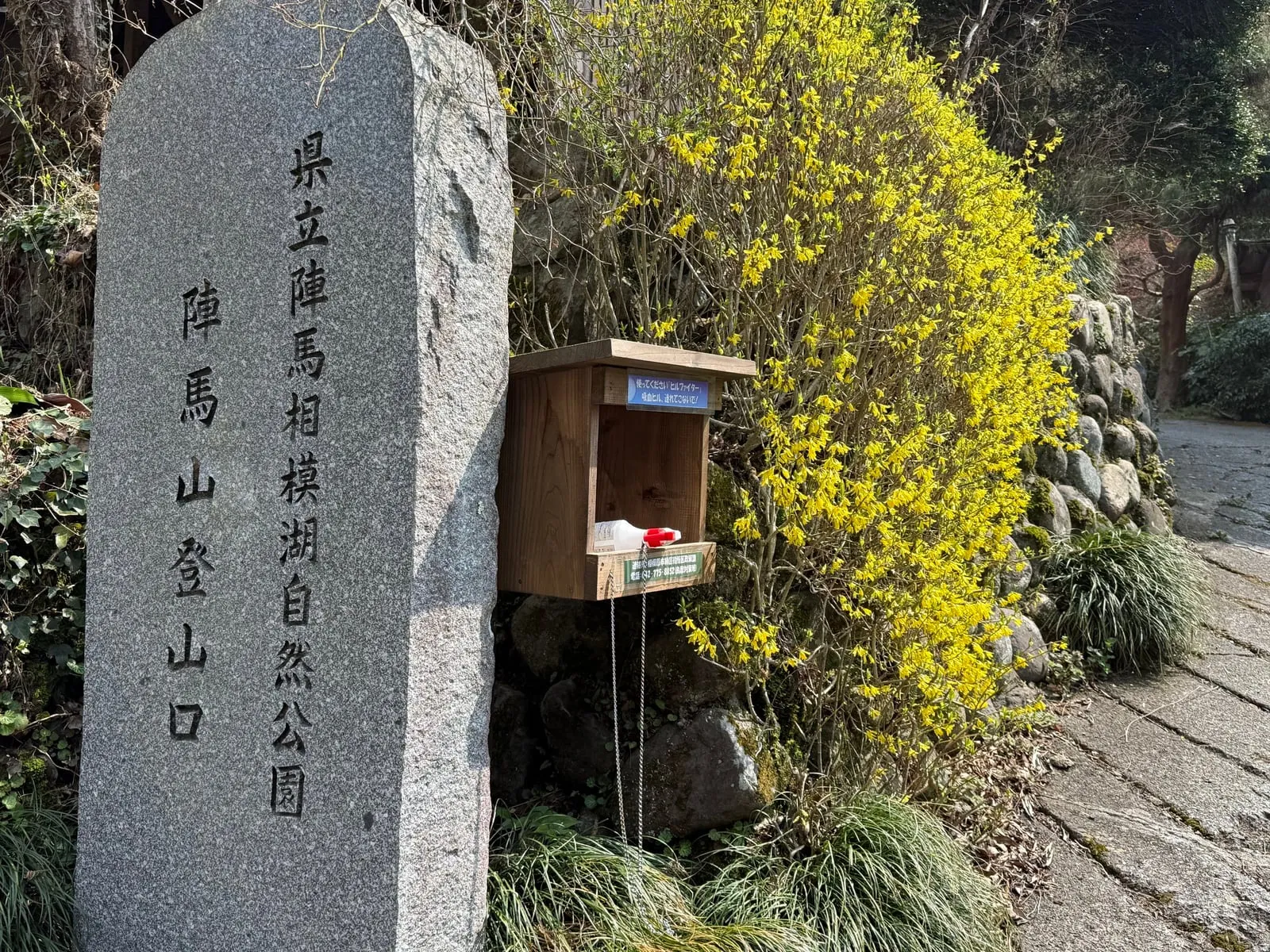
There was a nice café near Fujino Station. Now that the usual way back is from Jinba-kōgen-shita straight to Takao Station, I haven’t found a favourite place to stop after the hike yet. I’m still looking around Takao Station.
Other seasons on the same ridge
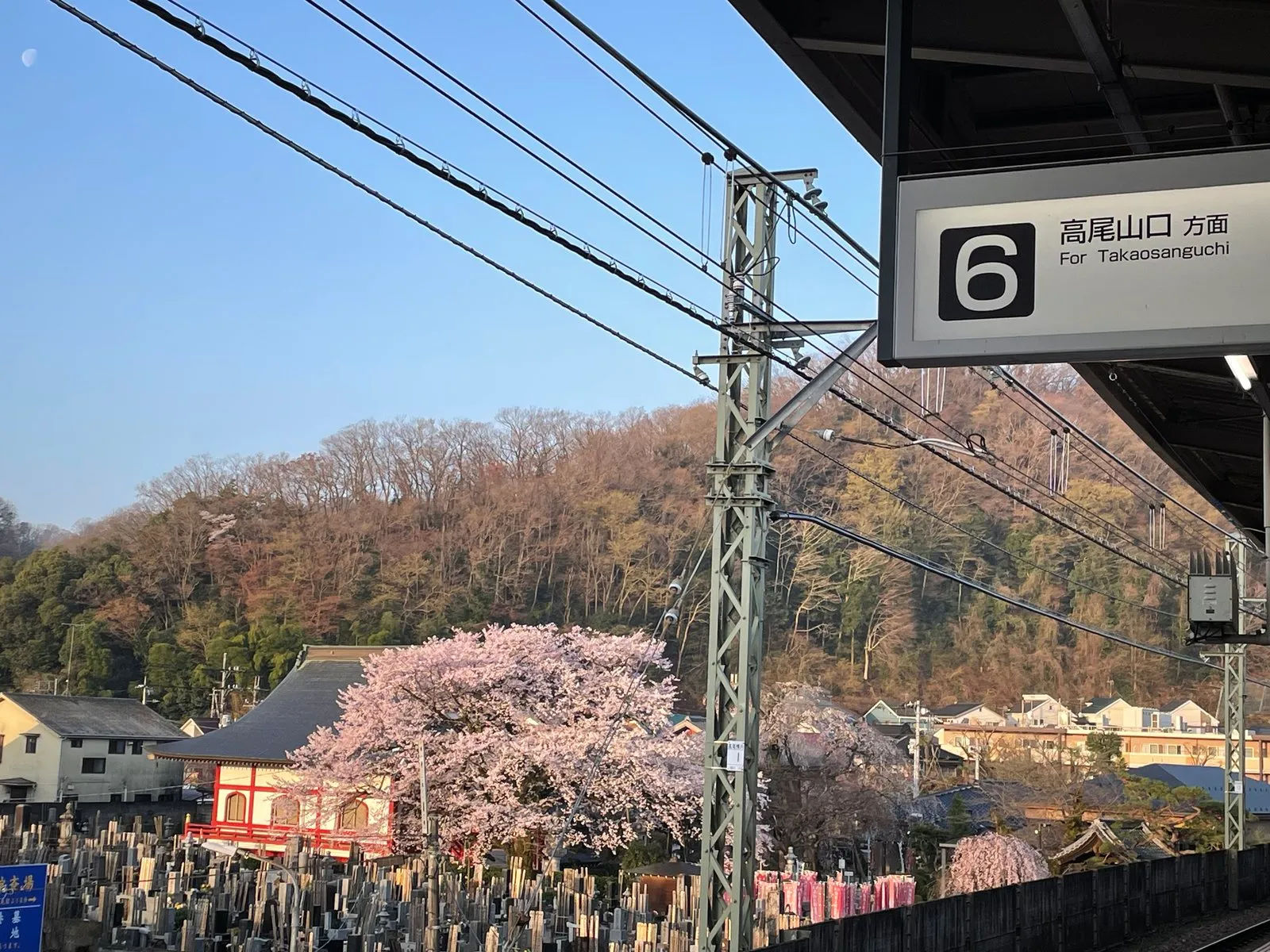
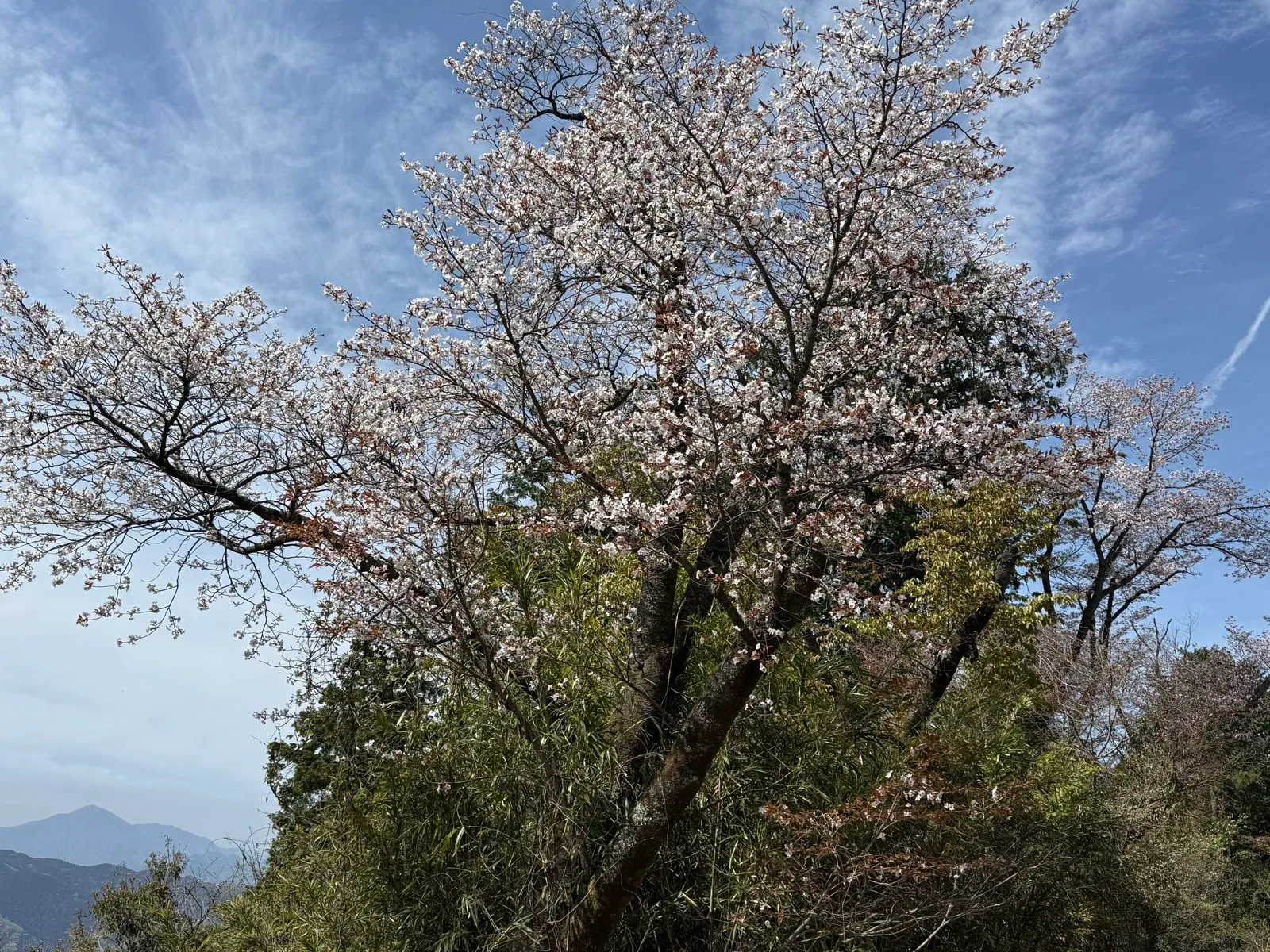
Spring. On my first full traverse, on 31 March 2024, the cherry tree below the platform at Keio Takao Station, one stop before Takaosanguchi, was in full bloom at a quarter past six in the morning. On 12 April 2026, cherries were in bloom along the trail.
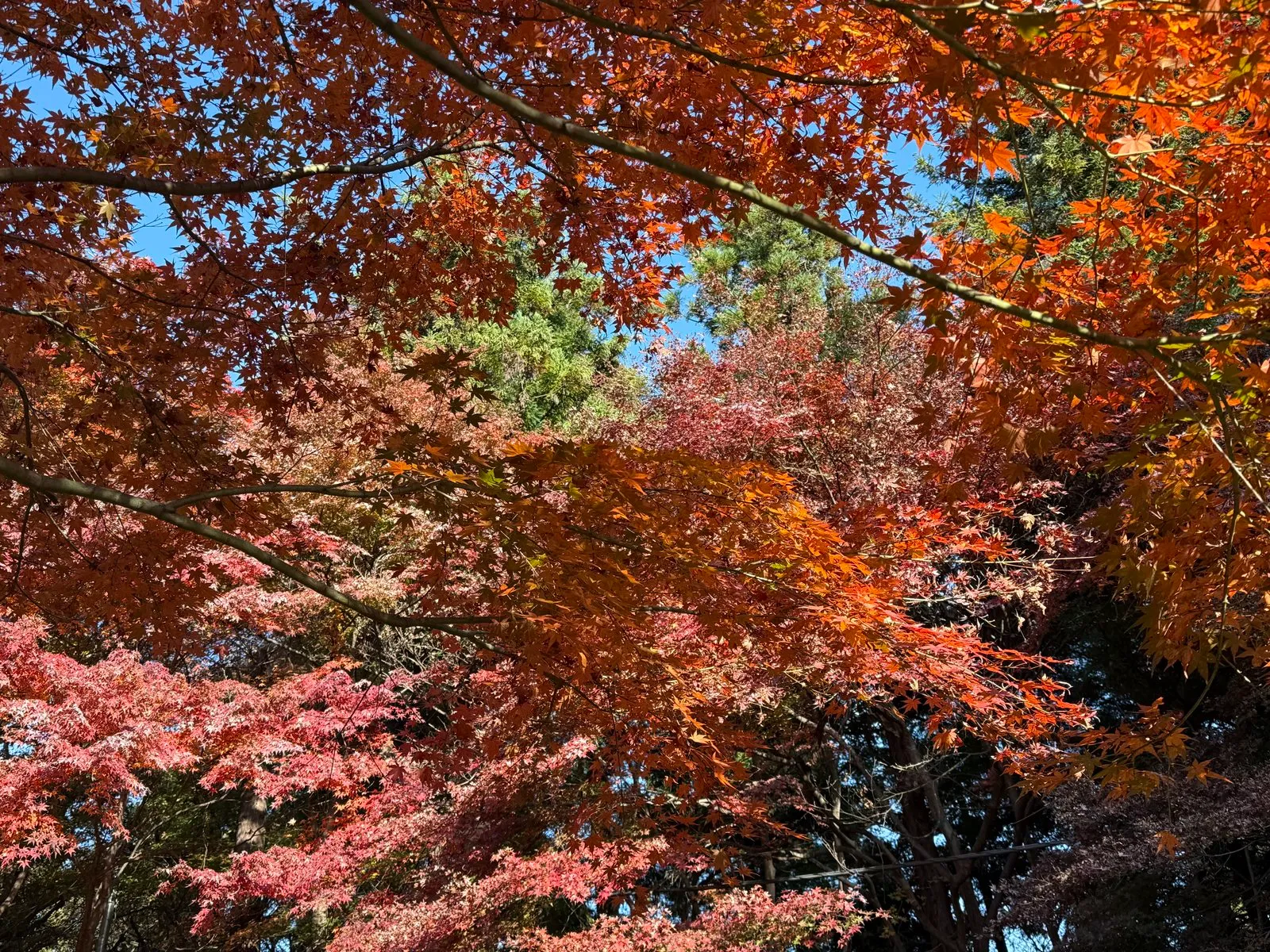
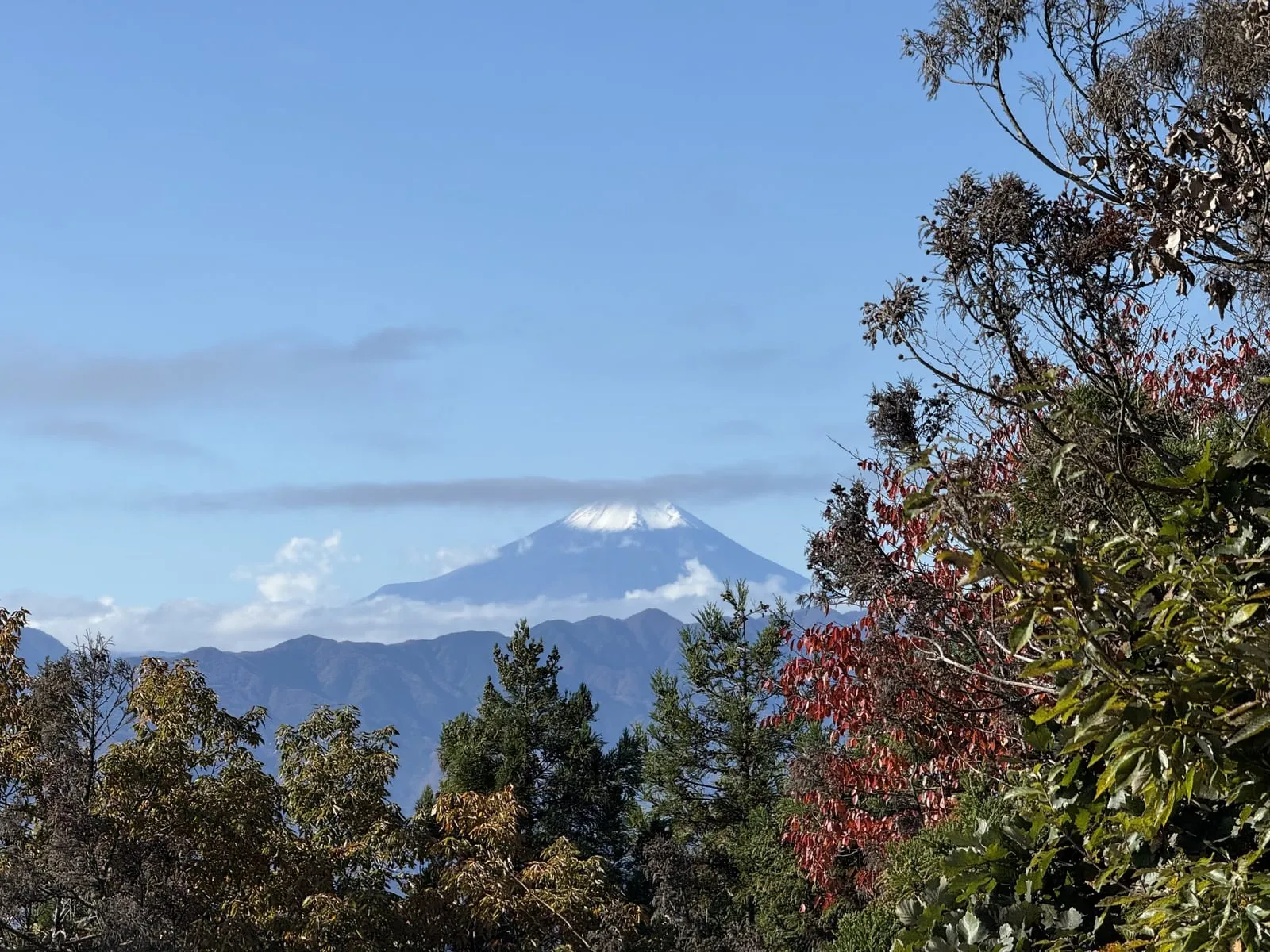
Autumn. In mid-November 2025 the maples around the summit of Mt. Takao were bright red and orange. In November 2024, Mt. Fuji showed up clearly from the ridge.
What to eat along the ridge
The summits along this ridge have teahouses, so you don’t need to carry a big lunch. These are from different days; the date is given for each. My top pick is the nameko mushroom soup and the wild-vegetable tempura.
Kagenobu: wild-vegetable tempura and nameko soup (November 2024). The tempura is made with wild greens and the soup with big nameko mushrooms, both from around Mt. Takao. When I was there, an older lady was frying the tempura. Spring is the best season for it. You can also get nameko soup at the Shiroyama teahouse.
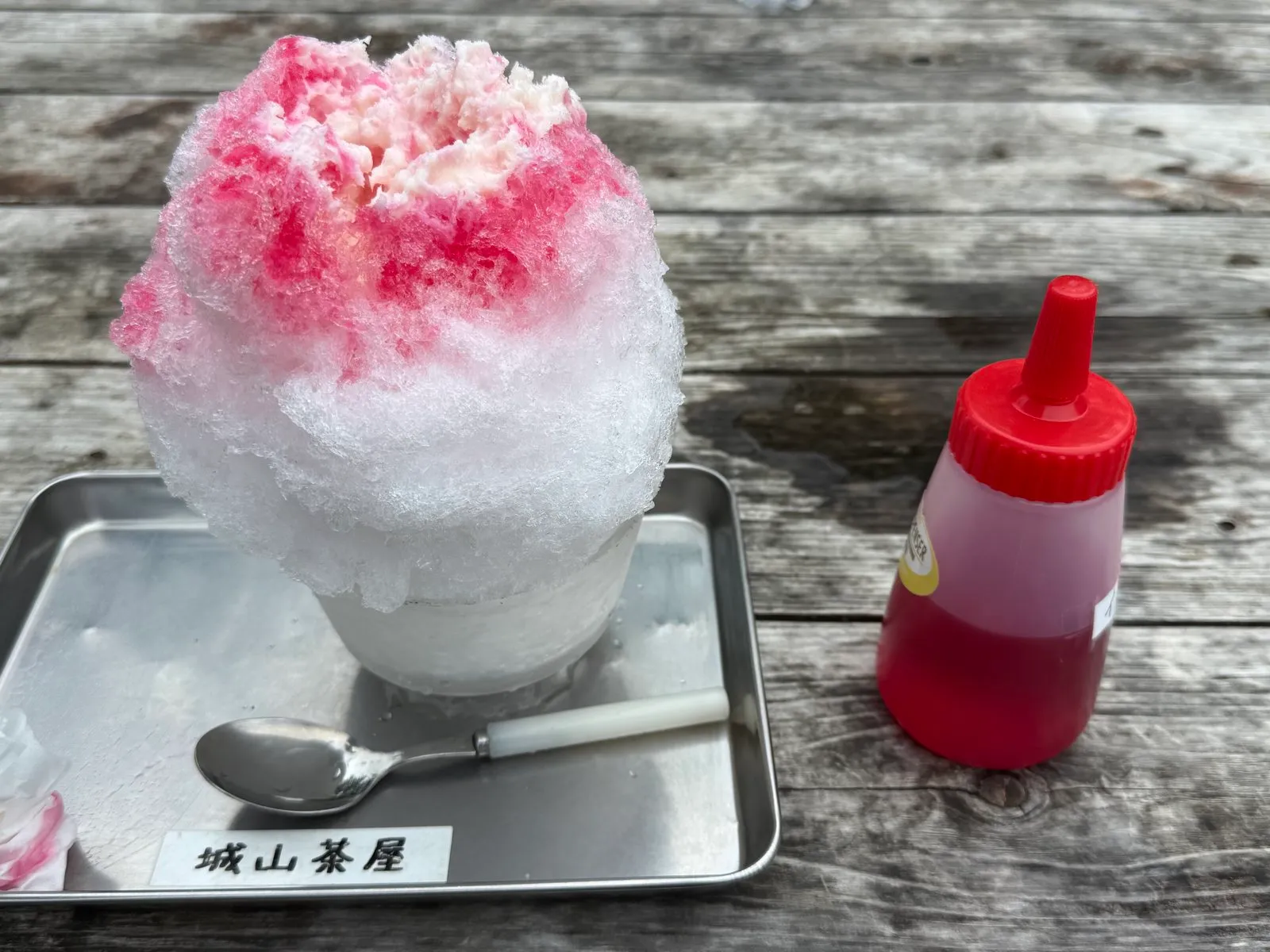
Shiroyama: kakigori (shaved ice), July 2026. On a cloudy summer day I only went as far as Shiroyama and stopped at the teahouse for shaved ice. As you can see, it comes piled high.
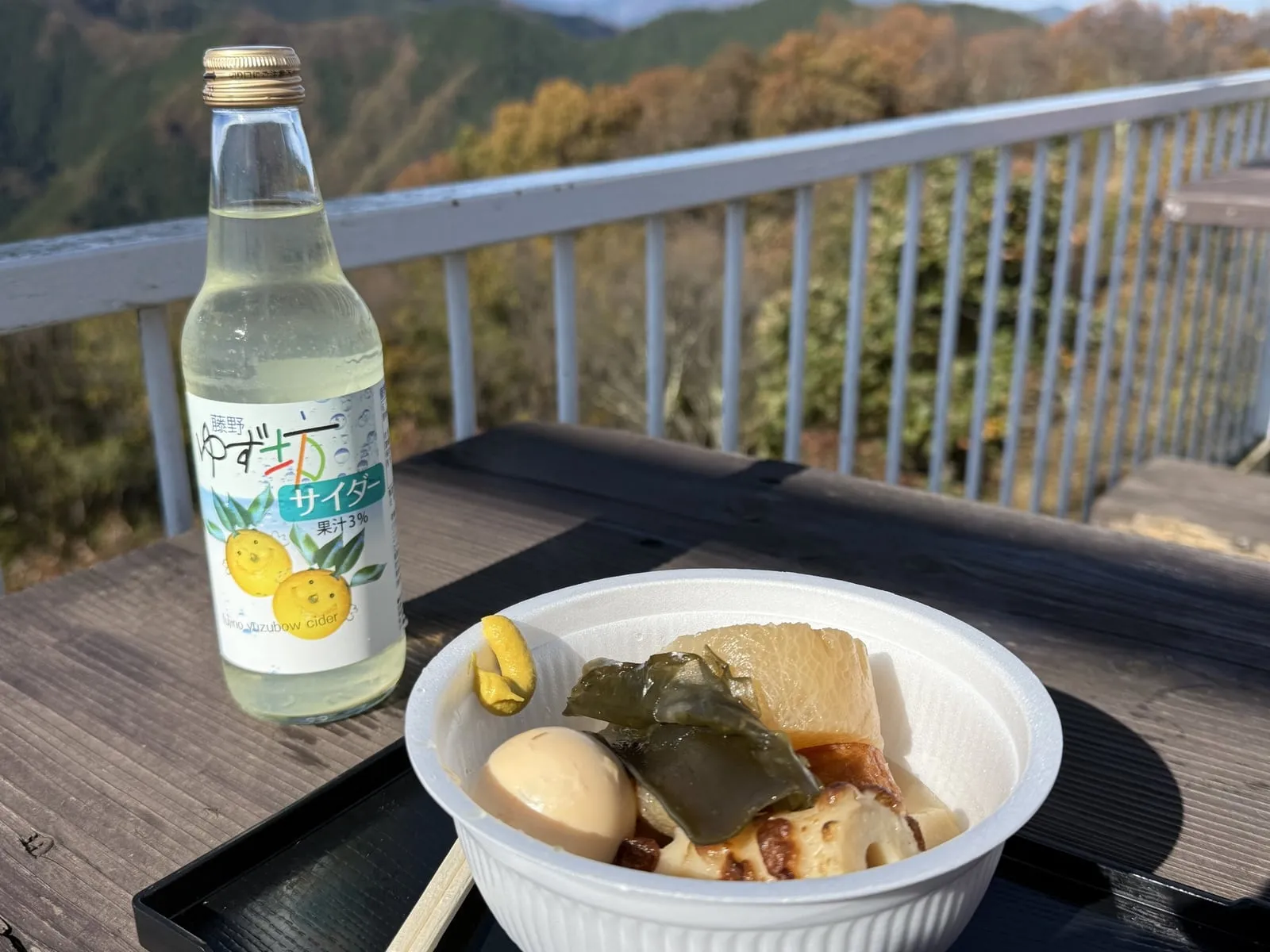
Mt. Jinba: oden and yuzu cider (November 2024). A bowl of oden, and yuzu cider, a local specialty of the Fujino area. On my March 2026 hike it was kenchin-jiru, and in November 2025 a bowl of sansai (mountain vegetable) udon.
Bring cash. Few of the teahouses take cards. Assume it’s cash only.
Bring your own food and water too. The teahouses aren’t a guarantee: they may be closed on the day, or sold out. Carry enough to get you to the end without them.
Plan it yourself
The trip report above is from my own hikes (dates given). The information in this section was checked separately; see the date at the end.
When to go
- Spring (cherry blossoms) and autumn (maple leaves) are the best. Winter is good too, as long as there’s no snow.
- I don’t recommend summer. Japanese summers have become very hot, and on low mountains like these there is a real risk of heatstroke.
- Cherry and maple seasons are crowded. Take the first Keio Line train of the day to Takaosanguchi and aim to reach the top of Mt. Takao before the cable car starts running. Past the summit the ridge is much quieter, even in peak season.
Getting there
Take the Keio Line from Shinjuku to Takaosanguchi Station, the end of the line. Keio says the fastest trip is 43 minutes on the reserved-seat Mt. TAKAO train, which runs on weekends and holidays only; other trains take longer. If you’re aiming for the first trains of the day, those are ordinary trains, so check the timetable for the time you want to leave. Fares and timetables: Keio’s website.
Buying food before you start. There’s a small 7-Eleven right outside the ticket gates at Takaosanguchi Station, but it opens later than the first trains and mostly sells drinks, snacks and souvenirs. For an early start, buy food before you get on the train, or at the 24-hour convenience stores (a FamilyMart and a 7-Eleven) about five minutes’ walk from the station, out on Route 20.
Route and time
Both of my recent full traverses, from my GPS logs. The standard time is YAMAP’s estimate; plan around that, not my time. Both of my hikes were deliberately fast, in trail-running shoes.
| March 2026 (this report) | June 2026 (recommended now) | |
|---|---|---|
| Up | Trail 6 | Inariyama trail |
| Down | Wada side → bus to Fujino Sta. | Jinba-kōgen-shita → bus to Takao Sta. |
| Distance | 16.2 km | 16.5 km |
| Total ascent | 1,195 m | 1,190 m |
| Standard time | 7 h 50 min | 7 h 58 min |
| My time | 4 h 43 min | 4 h 26 min |
- The ridge is the same either way: Mt. Takao → Shiroyama → Kobotoke Pass → Kagenobu → Mt. Jinba.
- The longest section is Kagenobu to Jinba. The steepest ups and downs are around Kobotoke Pass.
- Start early, finish before dark. In autumn and winter it gets dark early under the trees, and there are no lights on the trails. In late October 2026 the Takao Visitor Center advised finishing by 4:30 pm (4 pm to be safe). Carry a headlamp.
- If you get tired, you can leave the ridge. From Kagenobu it’s about an hour’s walk down to the Kobotoke bus stop, where Keio buses run to Takao Station North Exit (about 20 minutes). Check the bus times before you rely on it.
Getting home from Mt. Jinba
- Jinba-kōgen-shita → Takao Station North Exit (Nishi Tokyo Bus, route 美32): this is how I came back in June 2026. Check the timetable before you start (or on the notice at the summit teahouse) and work back from the bus time. Timetables: Nishi Tokyo Bus (Japanese) · Takao Station bus stops
- Wada → Fujino Station (Kanachu bus): no weekend or holiday service since June 2026; the line is scheduled to close at the end of March 2027 (Sagamihara City).
- Hiker bus to and from Wada (trial): Sagamihara City has been running a trial hiker bus between Fujino Station and Wada, via the Jinba-san trailhead. The autumn 2026 trial runs on Saturdays, Sundays and holidays from 10 October to 6 December 2026. Tickets are ¥800, sold online in advance only, from two weeks before (credit card or PayPay, no cash), 25 seats.
- Wada forest road and Wada Pass: a landslide closed the forest road to Wada Pass, even on foot, in October 2026, along with the Wada Pass car park. The Fujino tourist association’s notice of 22 October was unclear about when it would reopen, so check before you plan to use that road. The hiking trails up and down Mt. Jinba were not affected.
Before you go: current notices (October 2026)
- Toilets at Kagenobu: under construction from 16 October 2026 to around March 2027; only two toilets are open in the meantime. Toilets near the top of Mt. Takao and at Ichōdaira were open.
- Bears: Asiatic black bears live in the mountains around Okutakao. Make noise, especially early in the morning and towards evening, and avoid hiking alone.
- No bins: there are no rubbish bins on Mt. Takao. Take all your rubbish home.
- Closed side trails: some paths off the main ridge are still closed after landslides (for example, the bypass trail from between Kobotoke Pass and Shiroyama down to the Hikage forest road). Stick to the main ridge trail.
Official information: Takao Visitor Center (Japanese) · Sagamihara City: hiker bus to Wada (Japanese) · Fujino tourist association news (Japanese)
One piece of advice
If I could tell my first-time self one thing: slow down. Walk at an easier pace.